BlogLearn Commodity MarketFactors Affecting Commodity Prices

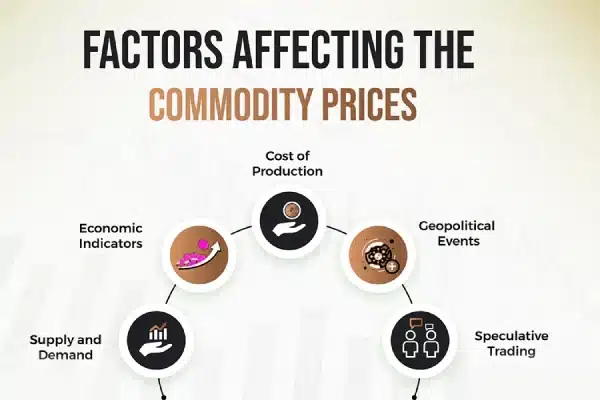
Factors Affecting Commodity Prices

Commodities form the bedrock of the global economy. From the oil that fuels our transportation to the wheat that feeds populations, these raw materials are vital to everyday life. For traders and investors, understanding what drives the prices of these tangible assets is crucial. Unlike equities, which are driven by corporate earnings and management decisions, commodity prices are dictated by complex global macroeconomic forces.

1. Supply and Demand: The Core Engine

At its most fundamental level, the commodity market is governed by the classic economic law of supply and demand. However, the factors influencing these two forces are highly unique to the physical nature of commodities:

  • Weather and Climate: Agricultural commodities (softs) like coffee, cocoa, wheat, and corn are highly sensitive to weather conditions. Droughts, floods, or unexpected frosts can devastate crops, severely reducing supply and driving prices upward.
  • Production Costs: The cost of extraction, mining, or farming directly impacts the supply. If the cost of electricity or labor rises, mining companies might scale back operations, reducing the global supply of metals like copper or gold.
  • Technological Advancements: Innovations can dramatically increase supply. For example, the development of hydraulic fracturing (fracking) revolutionized the oil industry, leading to a massive surge in US crude production.

2. Geopolitics and Global Stability

Many of the world’s primary commodities are concentrated in specific geographic regions. When geopolitical tensions arise in these areas, supply chains can be instantly disrupted, causing rapid price volatility.

For instance, political instability or conflict in the Middle East—a region holding a vast portion of the world’s proven oil reserves—frequently leads to spikes in crude oil prices due to fears of supply blockades. Similarly, trade wars, tariffs, and export bans imposed by governments can artificially restrict supply or divert trade flows, forcing buyers to seek more expensive alternatives.

3. The Influence of Currency Fluctuations (The USD Factor)

The vast majority of globally traded commodities are priced in United States Dollars (USD). Because of this benchmark pricing, there is a strong, historically inverse relationship between the value of the US Dollar and commodity prices.

When the US Dollar strengthens against other major currencies, commodities become more expensive for buyers using non-dollar currencies. This drop in purchasing power typically dampens global demand, causing commodity prices to fall. Conversely, a weaker greenback makes commodities cheaper for international buyers, stimulating demand and driving prices higher.

4. Economic Growth and Industrial Demand

Commodities are the raw inputs for industrial production and infrastructure development. Consequently, their prices are highly cyclical and closely tied to the health of the global economy.

During periods of economic expansion and industrial boom—particularly in rapidly developing economies like China and India—the demand for industrial metals (such as copper, aluminum, and iron ore) and energy resources skyrockets. Conversely, during global recessions, manufacturing activity slows down, construction projects are paused, and demand for these raw inputs plummets, dragging prices down with it.
Navigating the Commodity Markets

Successful commodity trading requires a holistic view of the world. By monitoring weather patterns, keeping a close eye on geopolitical developments, tracking the strength of the US Dollar, and analyzing global economic indicators, traders can better position themselves to anticipate major price shifts in these essential global resources.