BlogLearn Commodity MarketTypes of Commodities: A Complete Guide for Traders and Investors

Types of Commodities: A Complete Guide for Traders and Investors

The commodity market is one of the oldest and most vital pillars of the global financial system. From the coffee you drink in the morning to the fuel that powers your commute, commodities form the raw materials of daily life. For investors and traders, understanding the different types of commodities is the crucial first step toward building a diversified portfolio.

What is a Commodity?

At its core, a commodity is a basic good used in commerce that is interchangeable with other goods of the same type. In economic terms, commodities are standardized and fungible, meaning a barrel of crude oil produced in Texas is virtually identical to a barrel produced in Saudi Arabia. This standardization allows them to be traded on global exchanges.

Hard vs. Soft Commodities

Before diving into the specific categories, commodities are broadly divided into two major classes based on how they are sourced:

  • Hard Commodities: These are natural resources that must be mined or extracted. Examples include gold, copper, and crude oil. They typically have a long shelf life and are deeply tied to global industrial demand.
  • Soft Commodities: These are agricultural products or livestock that are grown, harvested, or reared. Examples include coffee, sugar, wheat, and cattle. Softs are highly sensitive to weather, climate cycles, and seasonal shifts.

The Four Major Commodity Categories

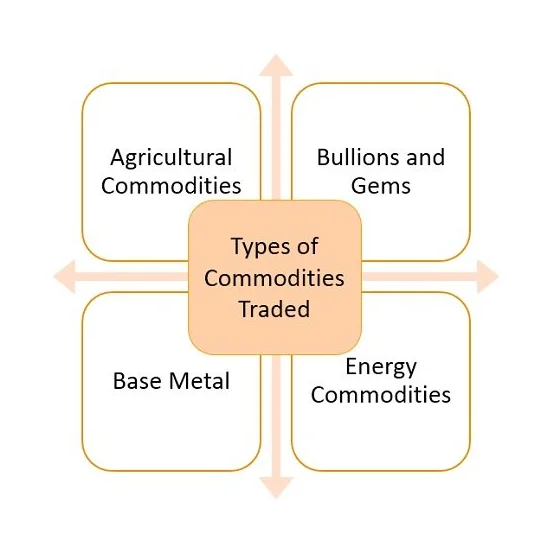
To navigate the market effectively, commodities are generally grouped into four primary categories:

1. Agricultural

Agricultural commodities are some of the most actively traded assets. They include staple foods and industrial crops like grains, corn, wheat, soybeans, and “soft” crops like coffee, cocoa, sugar, and cotton.

2. Energy

The energy sector is the powerhouse of the global commodity market. It is highly volatile and sensitive to geopolitical tensions. Key assets include Brent and WTI crude oil, natural gas, heating oil, and gasoline.

3. Metals

Metals are essential for manufacturing, technology, and wealth preservation. They are divided into precious metals (gold, silver, platinum) and base/industrial metals (copper, aluminum, nickel, iron ore).

4. Livestock and Meat

This category involves live animals raised for consumption. Key contracts traded on exchanges include live cattle, feeder cattle, and lean hogs.
Why Invest in Commodities?

Adding commodities to your portfolio offers several unique benefits:

  • Inflation Hedging: As the cost of goods and services rises, commodity prices typically rise too, helping to preserve purchasing power.
  • Portfolio Diversification: Commodities often show a low correlation with traditional assets like stocks and bonds.
  • Direct Exposure to Global Growth: Rising industrialization in emerging markets fuels demand for metals and energy, directly boosting their prices.

Conclusion

Understanding the types of commodities is fundamental to exploring this dynamic asset class. Whether you are looking to hedge against inflation with precious metals, tap into industrial expansion with copper, or speculate on global demand with crude oil, the commodity market offers a wide array of opportunities for educated investors.